
The STR Furnishing Checklist: Room by Room
May 17, 2026
Oikos Property Ventures
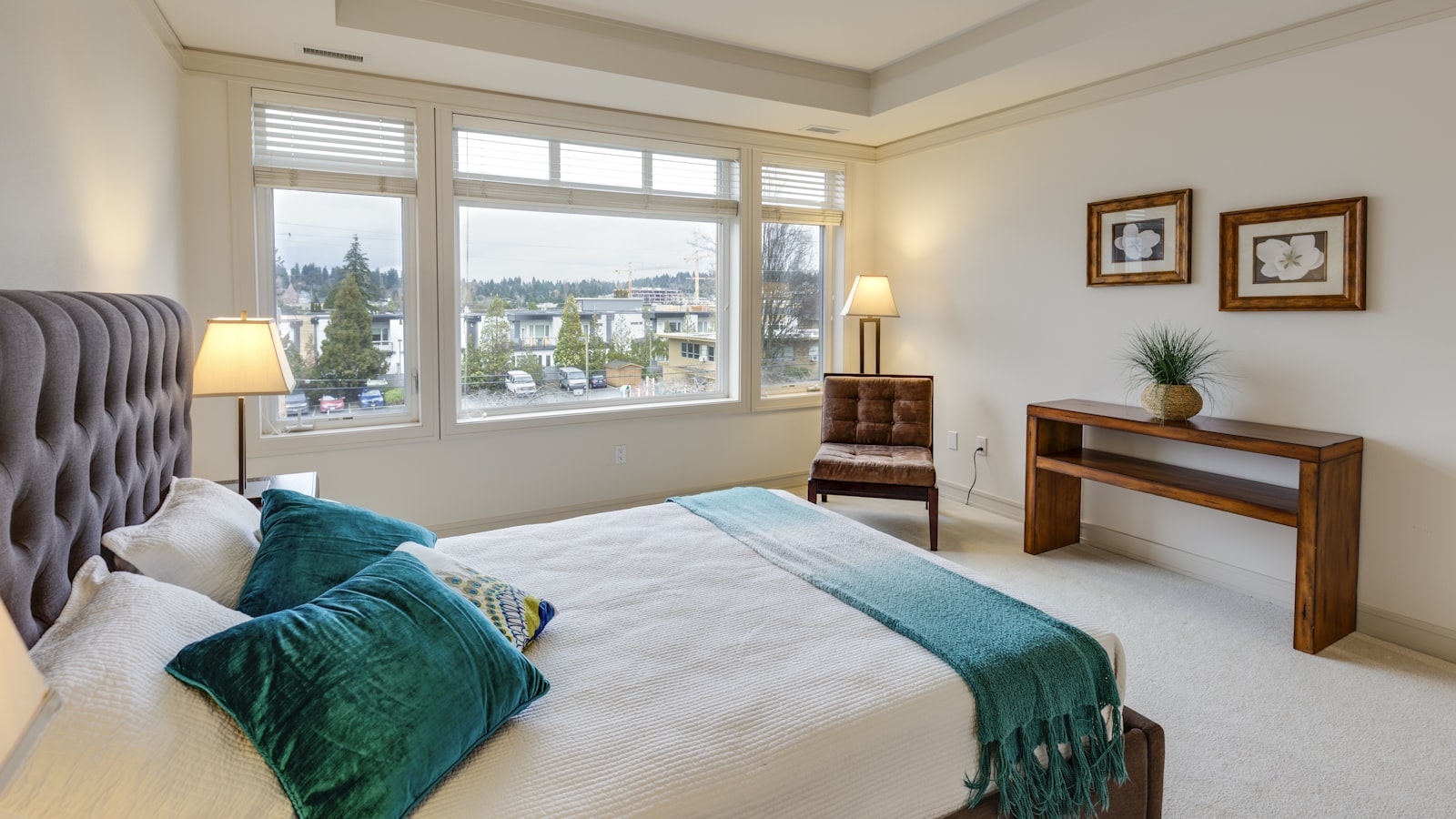
Every item on this list came from a mistake. Ours, or one we watched happen up close.
The mistake rarely looks like carelessness. It looks like enthusiasm — a host who got excited about throw pillows and gallery walls and then, two weeks before their first guest arrived, realized they had no towels. Or the host who bought two linen sets instead of three and discovered, the morning of their first same-day turnover, what that math actually means at 11am with guests arriving at 3.
First-time hosts consistently lose $2,000–$5,000 in the first year on the same set of avoidable problems: buying the wrong things in the wrong order, skipping the operational items until a guest points them out, or furnishing for aesthetics when durability is what the job requires.
TL;DR: Furnish in four phases. Buy encasements before anything else touches the beds. Get three linen sets per person of capacity, not one. Lock your storage closets. Fake plants always. Schlage Encode for locks, EERO for Wi-Fi, Nespresso over Keurig. Build the master bedroom shopping list before you buy a single decorative item.
The Mindset Before the List
This is not interior design. It is operations. Interior designers optimize for beauty. Operators optimize for durability, replaceability, and guest satisfaction across hundreds of check-ins. A beautiful sofa that pills after six months is a liability. A plain sofa with a washable cover that looks fine in photos and survives two years of use is an asset. Every decision runs through two filters: does it hold up, and does it photograph. If something fails one of those tests, it doesn't belong in the property.
Phase 1: Design — Decide Everything Before You Buy Anything
Phase 1 happens on paper, not in a store. It takes a weekend. Skipping it costs you two weeks and several hundred dollars in returns.
Every short-term rental needs one design direction that an eight-year-old could describe in four words. "Cozy cabin, lots of wood." "Modern farmhouse, white and gray." Write that sentence before you pull up a single shopping tab. Everything you buy either fits the sentence or it doesn't.
Decide before touching a credit card:
- Core concept and three-color palette (dominant / secondary / accent)
- Room-by-room furniture layout with measurements
- The hero shot angle for each room
- Occupant count per bedroom — this drives your entire linen calculation
- Total linen and towel requirements (three sets per person of capacity)
- Tech stack (smart locks, Wi-Fi, thermostat)
- Budget allocation by room
Phase 2: Major Pieces and Renovation in Parallel
Sofas take 6–12 weeks. If you order the sofa when renovation wraps up, you're staring at an empty living room for two more months while paying the mortgage. Order everything with a lead time longer than four weeks during the renovation — not after it.
Items that must be ordered during renovation:
- Sofas and sectionals
- Dining tables (solid wood, anything custom)
- Platform beds if going custom
- Any furniture that ships by freight
Renovation sequence: flooring after painting, before furniture delivery. Tile before any soft goods enter the space. Any plumbing or electrical before drywall closes back up.
Phase 3: Furniture Delivery and Install
Before movers set anything down, open your Phase 1 room plan and walk the space. Confirm where each piece goes before it comes off the truck — moving a sleeper sofa after it's fully assembled is miserable. After major pieces are placed, you'll find gaps. Budget 10–15% of your furniture spend for gap fills. Order fills before your photo date. Do not photograph a room that isn't finished — a reshoot costs as much as the original session.
Phase 4: The Final Sweep — Consumables and Functional Items
This phase generates the most guest complaints when skipped. Walk the property as a guest: start at the front door, try to check in, use the bathroom, make coffee, watch TV, go to sleep. Every time you reach for something and it's not there, write it down. That list is your Phase 4 order.
- Cleaning supplies — trash bags in every trash can, extra paper towels, dish soap, bathroom cleaner; your cleaner should not be buying supplies
- Toiletries — shampoo, conditioner, body wash in real dispensers (not individual bottles), hand soap at every sink
- Batteries — fresh batteries in every remote, smoke detector, door sensor, and thermostat; backup set in a drawer
- A toilet brush in every bathroom — in a holder that looks intentional; guests will mention its absence in reviews
- A plunger where guests can find it — under the sink in at least one bathroom, noted in the house manual
- Paper goods — at least four rolls of toilet paper per bathroom in reserve; napkins and paper towels stocked
- A basic first aid kit — Band-aids, pain reliever, antacids; a guest who finds Tylenol at 2am does not post about it anywhere
- A corkscrew and a bottle opener — obvious until missing, then a message at 9pm
The Operator's Tricks
Encasements, Not Covers
There is a difference between a mattress cover and a mattress encasement. A cover protects against surface spills. An encasement zips around the entire mattress and protects against bedbugs, moisture, and anything that penetrates through the bottom or sides. Get encasements for every mattress and every pillow — before anything else touches the beds. Do this first. Budget: $20–$50 per mattress, $5–$15 per pillow.
Three Sets Per Person Capacity
If your property sleeps eight, you need 24 bath towels, 24 washcloths, and enough sheet sets to run three complete cycles without laundry. The math: one set on the beds, one at the laundry, one in the linen closet. When your cleaner arrives for a same-day turnover — checkout at 11am, check-in at 4pm — they should be able to strip every bed and replace every towel without waiting on a single dryer cycle. Without the third set, you're asking your cleaner to either rush the laundry or delay check-in. Total linen budget for a property sleeping eight: $700–$1,500 minimum.
Bulk Toiletries in Real Containers
Individual shampoo bottles run out mid-stay, produce trash your cleaner has to manage, and photograph like a budget motel. Use large pump dispensers or wall-mounted refillable units. A 32-ounce bottle of quality shampoo at $12 gives you 60–80 uses. Individual travel bottles at $0.30 each give you one use. Your cleaner checks levels on each dispenser at every turnover and refills from bulk supply kept in the locked cleaning closet. Two minutes. No restocking trips.
Internal Locks on Storage
Lock your linen closet and your cleaning supply closet. The linen closet: your backup towels and sheets are there and guests shouldn't be rummaging. The cleaning supply closet: cleaning chemicals are a safety and liability issue in a property where guests with children are staying. A simple keyed interior lever lock ($25–$35) on any door. Guests do not get keys to either closet.
Fake Plants. Every Time.
Real plants in a short-term rental die. They get overwatered by guests who mean well, underwatered between stays, attacked by gnats from the soil, and then your cleaner deals with the dead plant on turnover day. Fake plants that don't look fake: IKEA's Fejka line (affordable, realistic), Nearly Natural (higher-end). The rule: if it photographs like a real plant at six feet away, it's fine.
The Tech Stack
Schlage Encode Smart Locks
The default choice for STR smart locks. Schlage Encode is a keypad deadbolt with built-in Wi-Fi — connects directly to your home network with no hub required. Guest-specific codes set to expire at checkout, deletable remotely. No key handoff. No lockbox guessing. Cost: $200–$250 per door. Requires 2.4GHz Wi-Fi, not 5GHz.
EERO Mesh Routers
Wi-Fi coverage is a guest expectation, not an amenity. A single router in a three-bedroom property leaves bedrooms with weak signal. EERO mesh systems cover most 2,000–3,500 square foot properties adequately. For properties over 4,000 square feet or any property where you want to build a direct booking list: StayFi replaces your standard router with a hospitality-grade portal. Guests connect through a branded splash page that captures their email before giving access. One property captures 200–400 email addresses per year.
Nespresso Over Keurig
Both cost about the same per serving. A Nespresso machine on the kitchen counter photographs like a hotel amenity. A Keurig photographs like an office break room. Stock espresso, lungo, and a decaf, and note in your listing that pods are provided. Budget $150–$200 for a Nespresso Essenza Mini or Vertuo Pop.
Other Tech Worth Having
- Smart thermostat (Ecobee or Nest, $150–$200) — remote access and temperature range limits prevent guests from running AC to 60°F in August
- Noise monitors (Minut or NoiseAware, $100–$150) — measure ambient decibel levels without recording audio; alert you before neighbors call anyone
- Water leak sensors ($20–$40 each) — under every sink and near the water heater; catches a slow drip before it becomes $8,000 in water damage
- Ring cameras — exterior only, disclosed to guests; front door, back door, driveway if applicable
The Master Bedroom Shopping List
Build this for every bedroom before you buy anything. Start with the master, then copy with adjustments for each additional bedroom.
The bed:
- Mattress ($400–$1,000 — high-contact item, spend here)
- Mattress encasement (waterproof zip, SafeRest or Protect-A-Bed)
- Mattress pad over the encasement
- Pillows — two per sleeping person, plus pillow encasements for all
- Three complete sheet sets per sleeping person
Linen count for a room sleeping two: six bath towels, six washcloths, three sheet sets.
The furniture:
- Bed frame or platform bed
- Two bedside tables — one per side; guests need a surface on both sides
- Bedside lamps on both tables
- Bedside outlets or charging stations (USB ports minimum on each nightstand)
- Luggage rack (one per room — consider removing the dresser if space is tight)
- Blackout curtains (not room-darkening — blackout; guests notice the difference)
The extras:
- Throw blanket folded at the foot of the bed
- Two decorative throw pillows per bed
- Hangers in the closet — 10 minimum, wood or velvet, not wire
- Small trash can with liner (2–4 gallon)
Budget Allocation for a Three-Bedroom Property at $35,000
- 40% to bedrooms ($14,000) — mattresses, encasements, three linen sets per person, towels, bed frames, bedside tables, lamps, charging stations, luggage racks, blackout curtains
- 25% to living and dining ($8,750) — sofa or sectional, dining table and chairs, coffee table, area rug
- 15% to kitchen ($5,250) — cookware, dish set (service for eight minimum), glassware, flatware, small appliances
- 10% to outdoor ($3,500) — fire pit, outdoor seating, grill or Blackstone griddle, string lights
- 10% to decor, consumables, and tech ($3,500) — fake plants, artwork, throw pillows, all Phase 4 consumables, smart lock and Wi-Fi installation
Today's Move
Build the master bedroom shopping list before you buy anything else. Do not skip the encasements and do not shortcut the linen count. Get to three sets per person before you buy a single throw pillow. Then write your design concept, your three-color palette, and your room-by-room layout. The decorating is the fun part. The sequence is what makes it work.
Article
