
Texas Hill Country STR Market Report
May 4, 2026
Oikos Property Ventures
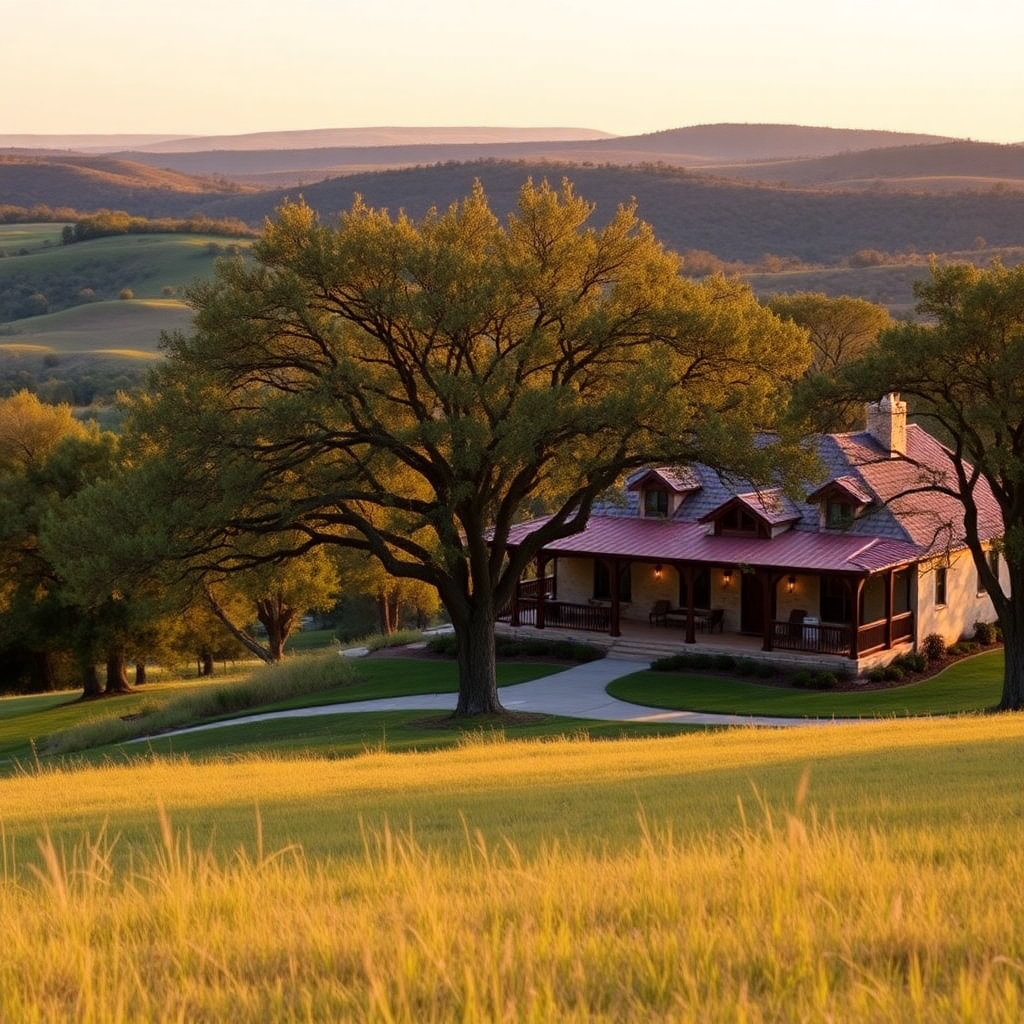
The Hill Country gets talked about like it's one market — Driftwood to Dripping Springs to New Braunfels to Canyon Lake, all lumped under "Hill Country short-term rentals" like they behave the same way. They don't. I manage properties across that whole corridor, and the differences between a small casita in Driftwood and a waterfront retreat outside Belton are bigger than the similarities. I want to walk through what I'm actually seeing, property type by property type, instead of handing you one number and calling it a market report.
The Hill Country isn't a single market — it's several
Think of it as three distinct products wearing the same regional label:
- Small, intentional properties — casitas, cottages, tiny homes in and around Driftwood and the wine-country corridor. These book frequently, at moderate rates, and lean on repeat short stays.
- Mid-size family homes — the New Braunfels and Gruene cluster, close to river tubing and the historic district, popular with groups who want a home base for a weekend, not a hotel room.
- Large waterfront or acreage properties — the outliers with real land or lake access, commanding premium rates but with more volatility in how often they book.
Comparing occupancy across those three without separating them is how you end up with a "market average" that describes none of them accurately.
What each type is actually doing
Small Hill Country properties (Driftwood-area casitas and cottages): These are my highest-frequency bookers in the region — one of my Driftwood cottages ran over 60 stays in the trailing year at true occupancy above 50%, and a nearby tiny casita ran even more stays at a similar occupancy level, both at a moderate nightly rate. High volume, high review count, steady demand. This is the segment where consistency beats a big swing rate — a $150-a-night property that books half the year outperforms a $300-a-night property that books a fifth of it, on both revenue and on the guest-experience data that keeps a listing healthy long-term.
Mid-size New Braunfels / Gruene properties: This cluster tells an honest, less flattering story right now. Both properties I manage in that corridor are running true occupancy in the high teens to low twenties — soft compared to the Driftwood cluster. Some of that is a real market signal: the Gruene/New Braunfels short-term rental supply has grown, and undifferentiated 3-bedroom condos are competing against a lot of similar inventory. Some of it is simply that these are the kind of listings that respond well to a pricing and positioning refresh rather than a market that's actually dead. I'm not going to pretend a soft number is something other than what it is.
Larger waterfront and acreage properties: A five-acre waterfront retreat near Belton is one of the strongest performers in the entire portfolio — true occupancy above 60% at a premium rate, meaningfully outperforming most properties twice its price point. That's not typical of the tier; it's a property with a genuinely rare feature set (real waterfront access, real acreage) commanding real premium demand. It's a useful data point on what "unique" is actually worth in this market, not a number every Hill Country property should expect to hit.
And the honest counterpoint — the cold-start: Not every Hill Country property performs. I have one Canyon Lake property that's sat at effectively zero bookings over the trailing year despite being actively listed. That's not a market failure; it's almost always a listing-visibility or pricing problem in the first several months after a property goes live, and it's exactly the kind of thing that needs direct attention rather than assuming "the market will find it eventually." I'm including it here because a market report that only shows winners isn't honest.
What the rate spread tells you
Across the Hill Country corridor, nightly rates run from around $130 on the small end to well over $500 on waterfront and large-acreage properties — a wider spread than you'll typically see in a dense urban market like central Austin, because the product itself is more varied. A tiny home and a five-acre lake house aren't competing for the same guest, so they shouldn't be priced or marketed like they are.
The practical implication for an owner: your comparable set matters enormously. If you're benchmarking a Driftwood cottage against Belton waterfront rates, you'll draw the wrong conclusion in either direction — either overpricing a small property into a soft calendar, or underpricing a genuinely premium one.
Seasonality: the Hill Country runs on the same calendar as Austin, with one twist
Summer and spring carry the region, same as greater Austin, with a real trough from late fall into January. The twist is the river and lake properties, which see a sharper seasonal swing than the smaller inland properties — a waterfront property's summer premium is real, but so is its winter softness, more so than a Driftwood casita that books steadily on wine-country and weekend-getaway demand year-round regardless of season.
If you own a water-access property, plan your year around that swing deliberately — rate aggressively into peak season, and don't be surprised or discouraged by a quieter winter that's a pattern, not a problem.
What I'd tell an owner evaluating a Hill Country property right now
- Know which of the three products you're buying or already own before you benchmark against anyone else's numbers. A casita, a mid-size family home, and a waterfront estate are different businesses.
- A soft occupancy number in the New Braunfels/Gruene cluster right now is a real market signal, not noise — differentiation and pricing strategy matter more there than almost anywhere else in the region.
- A truly unique feature — real water access, real acreage — is worth a genuine premium, but it's not a strategy you can manufacture on a standard family home. Don't expect standard-property returns to jump just because it's "Hill Country."
- Don't assume a listing will find its audience on its own. A cold-start property needs active attention in its first several months, not patience alone.
What I'd tell someone buying their first Hill Country property
If you're not yet an owner but you're looking, resist the urge to shop by region alone. "Hill Country" on a listing doesn't tell you much about which of the three products above you're actually about to buy. Ask the specific questions instead: what's the realistic occupancy for this property type in this specific town, not the region broadly? What's driving demand here — river access, wine country, event space, proximity to Austin? And is there anything genuinely differentiating about this specific property, or is it one of several near-identical 3-bedroom homes competing for the same guest?
That last question matters more in the Hill Country than almost anywhere else I manage properties, because the region's growth has meant more supply landing in the same handful of towns. A property with nothing distinguishing it beyond "it's in the Hill Country" is exactly the kind of listing that ends up in the soft-occupancy cluster a year later, wondering why the market "slowed down" when the real story is that the competitive set simply grew.
The honest bottom line
The Texas Hill Country is not one market with one occupancy number and one rate. It's a handful of genuinely different products sharing a region and a marketing label, and the owners who do well here are the ones who understand which product they actually own before they compare themselves to anyone else's numbers — including the ones in this report.
If you own a Hill Country property and want an honest read on how it stacks up against comparable properties I manage, I'm glad to walk through it.
Article
